
0
$0
0 items
Running a B2B or wholesale store is fundamentally different from selling to everyday consumers. Your customers buy in larger quantities, expect better prices for bigger orders, and often have negotiated rates based on their relationship with your business. Standard WooCommerce pricing simply was not built for this reality.
The good news is that with the right tools and strategies, you can transform your WooCommerce store into a powerful B2B platform that handles complex bulk pricing with ease. In this guide, we will explore the various approaches to bulk pricing, from simple volume discounts to sophisticated loyalty systems, and show you how to implement them effectively using B2BKing.
The most straightforward approach to bulk pricing is tiered pricing, which offers progressively better discounts as customers purchase more units. This method is intuitive for buyers and easy to manage for store owners.
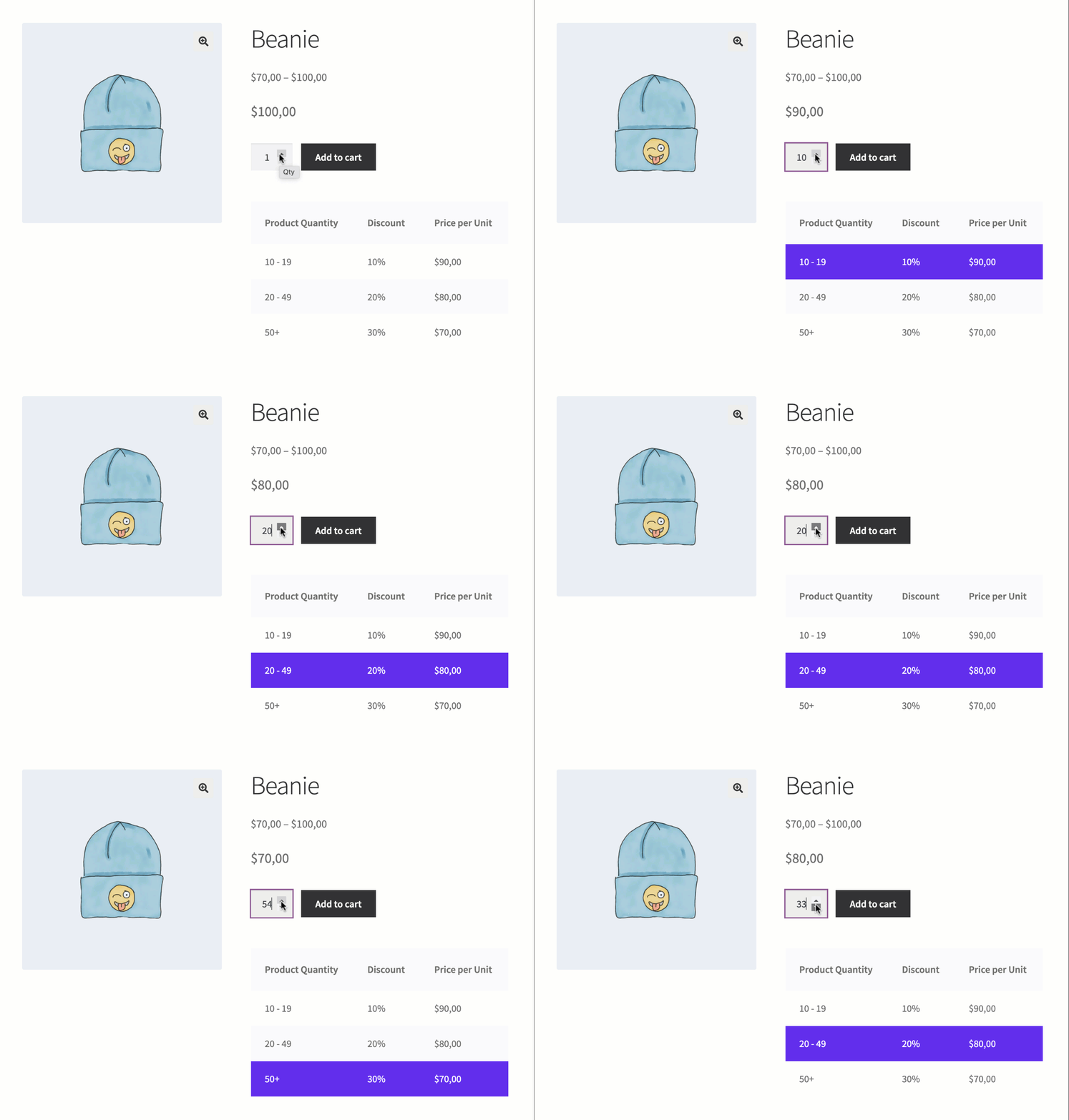
With B2BKing, you can set up tiered pricing directly on individual products or apply it across your entire catalog using tiered price rules. For example, you might configure a rule that gives customers a 5% discount when they purchase 10 or more units, a 10% discount at 20 units, and a 15% discount at 50 units. This structure encourages customers to buy more to unlock better pricing.
The flexibility here is significant. Rather than manually editing thousands of products, you can create a single tiered price rule that applies to all products, specific categories, or items with certain tags. A building supplies store might apply one tiered pricing structure to lumber products and a different structure to hardware items. A fashion wholesaler could set unique volume discounts for each season's collection. This bulk approach to setting prices saves countless hours of administrative work.
While tiered pricing rewards quantity, wholesale pricing rewards relationships. Different business customers often warrant different base prices depending on their purchasing volume, market segment, or negotiated agreements.
B2BKing addresses this through customer groups. You can create unlimited groups such as Retailers, Distributors, Premium Partners, or any classification that makes sense for your business. Each group can have its own unique pricing across your product catalog. A small retailer might pay list price while a major distributor sees prices 30% lower on every product.
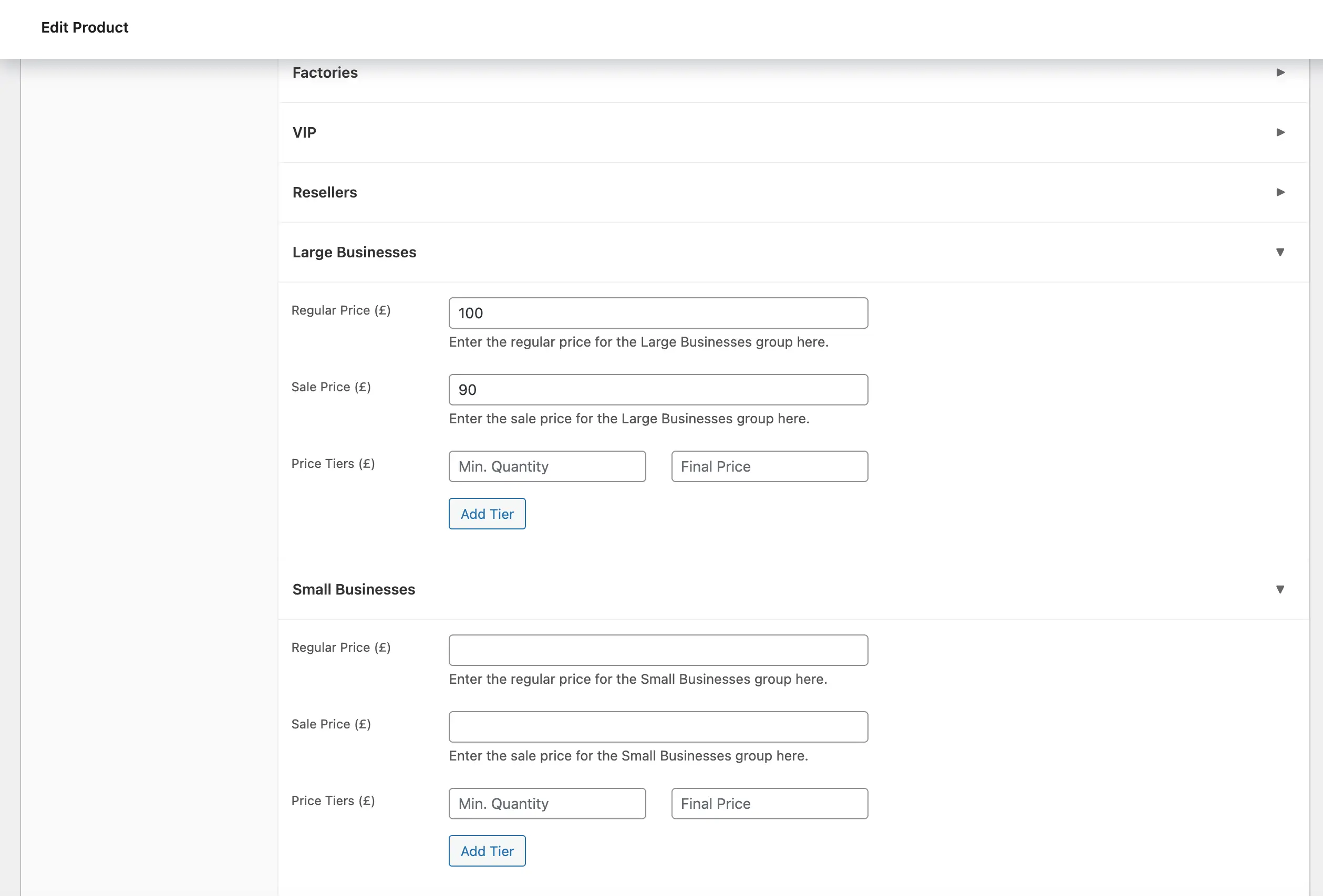
Assigning customers to groups is straightforward. When you approve a new B2B customer, you simply assign them to the appropriate group based on their business type, credit standing, or whatever criteria matter to your operation. They immediately see their group-specific pricing when browsing your store.
This system also supports growth within your customer base. As a small retailer grows into a larger account, you can move them to a group with better pricing. The transition is seamless, and the customer instantly sees their improved rates without any disruption.
Managing prices for thousands of products across multiple customer groups could be overwhelming without the right tools. Manually entering prices through the WordPress admin would take weeks for a large catalog. This is where bulk import capabilities become essential.
B2BKing includes a built-in importer that accepts CSV files, allowing you to update thousands of prices in minutes. If you already use spreadsheets to manage your pricing, you can prepare your data in Excel or Google Sheets and import it directly. The system handles group-specific pricing, meaning you can set unique prices for each customer group across your entire catalog in a single import operation.
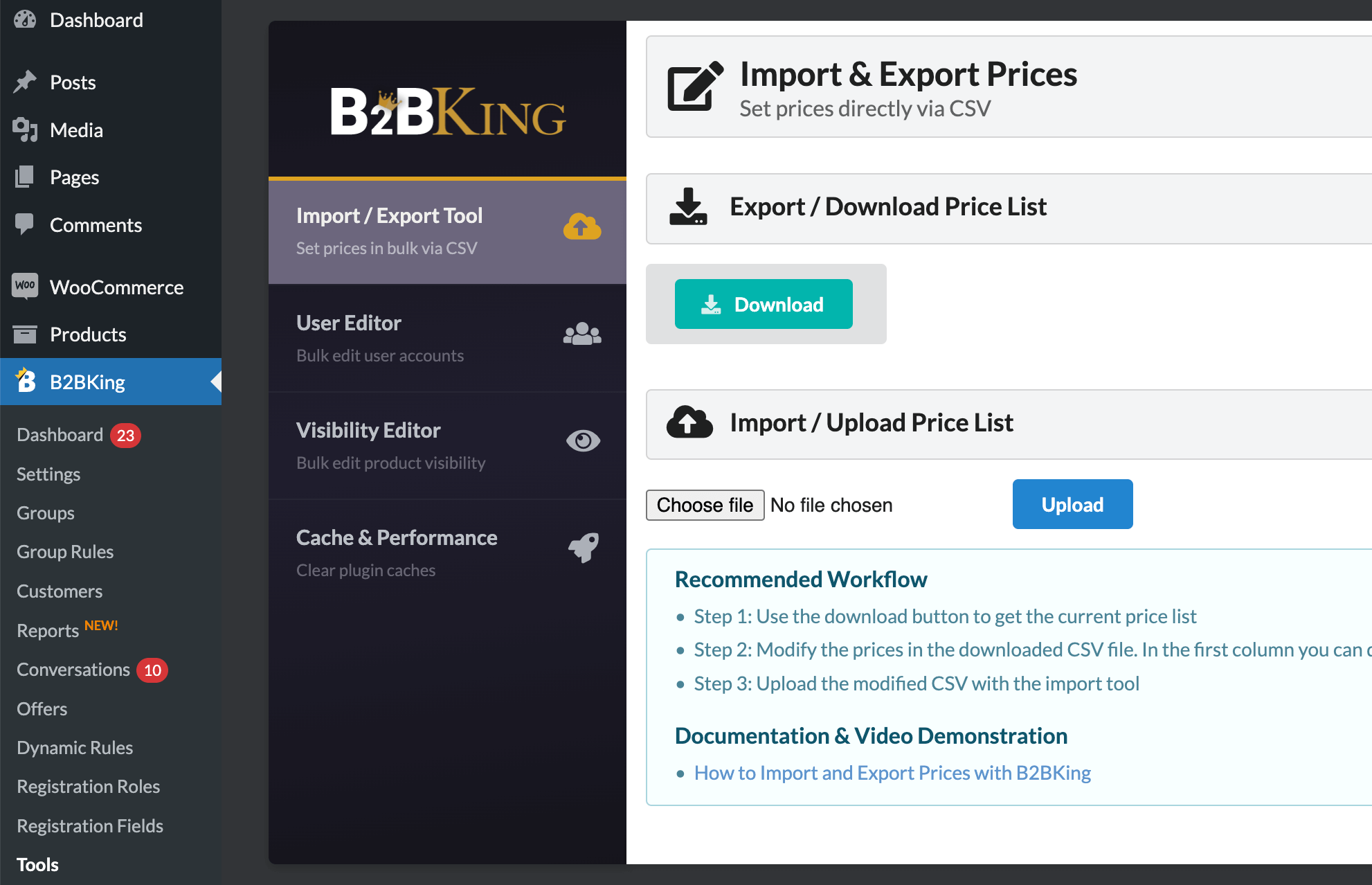
For stores already comfortable with WooCommerce's native import system, B2BKing integrates seamlessly with that workflow as well. This means you can continue using familiar processes while adding B2B pricing capabilities. Whether you are setting up a new store or updating prices for the new quarter, bulk imports make the process manageable.
Sometimes static pricing is not enough. Markets change, promotions come and go, and certain customer segments deserve special treatment. Dynamic pricing rules provide the flexibility to handle these situations without restructuring your entire price list.
With dynamic rules, you can create powerful pricing adjustments based on categories, groups, and other criteria. For instance, you might set a rule giving your VIP group a 10% discount on all electronics. Or you could offer resellers a 25% discount across your entire catalog. These rules layer on top of your base pricing and can be activated or deactivated as needed.
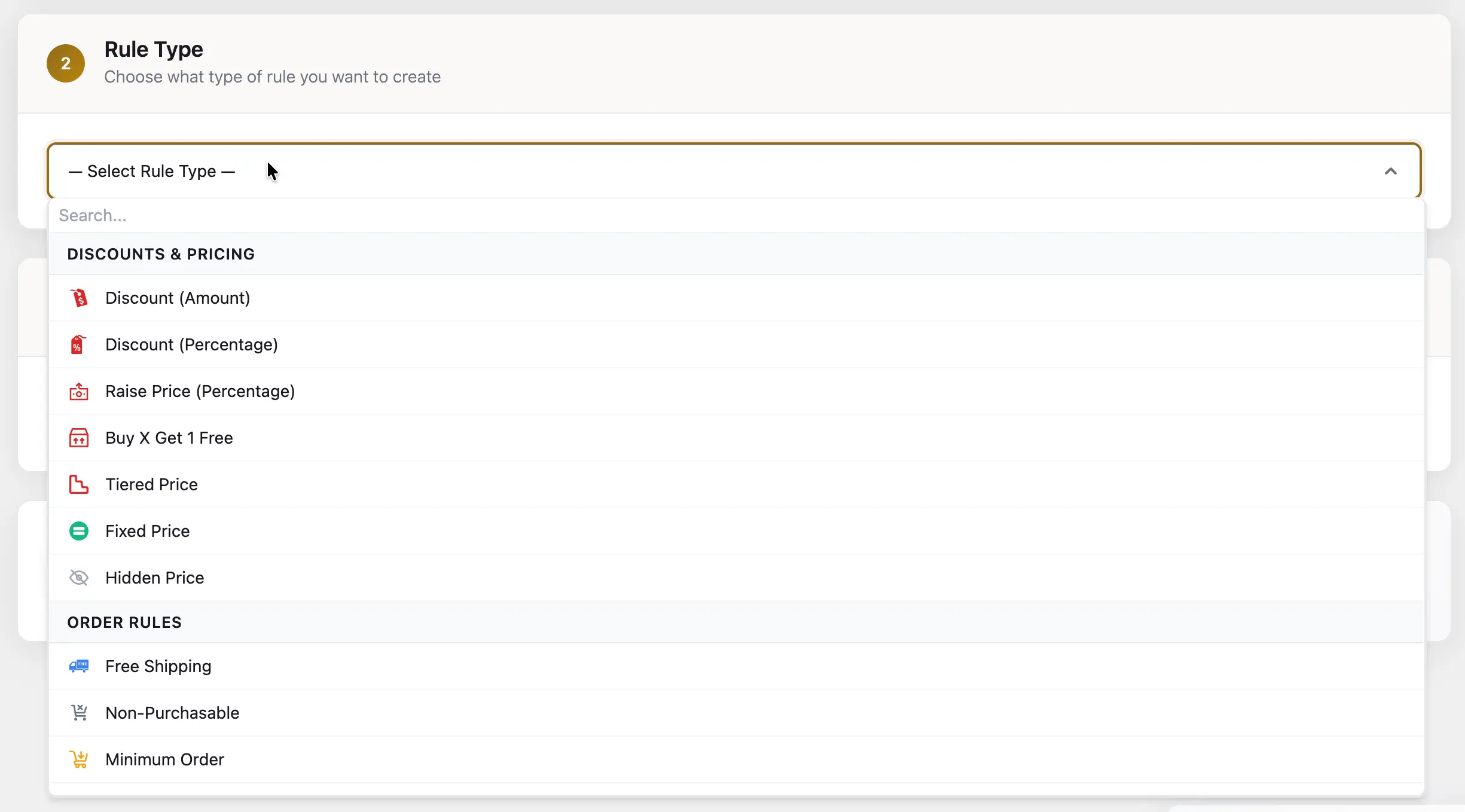
The power of dynamic rules becomes apparent when you need to run promotions or adjust pricing strategy. Rather than editing hundreds of products, you create a single rule that applies the change everywhere it should. When the promotion ends or strategy shifts, you simply disable the rule.
Smart B2B stores use pricing to shape customer behavior. Conditional discounts take dynamic rules a step further by applying them only when certain criteria are met.
Consider a rule that offers a 10% discount on orders over $20,000. This encourages customers who might otherwise place multiple smaller orders to consolidate their purchasing. The larger order benefits your operation through reduced processing and shipping costs, while the customer enjoys better pricing. It is a win for everyone involved.
These conditions can be based on order totals, quantities, cart contents, or combinations of factors. A food distributor might offer free shipping on orders exceeding $5,000 while also providing a 5% discount on orders over $10,000. An industrial supplier could require minimum quantities on certain product categories before discounts apply.
Long-term customer relationships drive B2B success. A loyalty system that automatically rewards increasing purchase volumes strengthens these relationships and encourages customers to concentrate their buying with your store.
B2BKing's group rules system enables you to create automatic progression between customer groups based on purchasing history. You might start all new customers in a Standard group, then automatically move them to Silver status after $25,000 in total purchases, Gold status at $50,000, and Platinum at $100,000. Each tier brings better pricing, and customers can track their progress toward the next level.
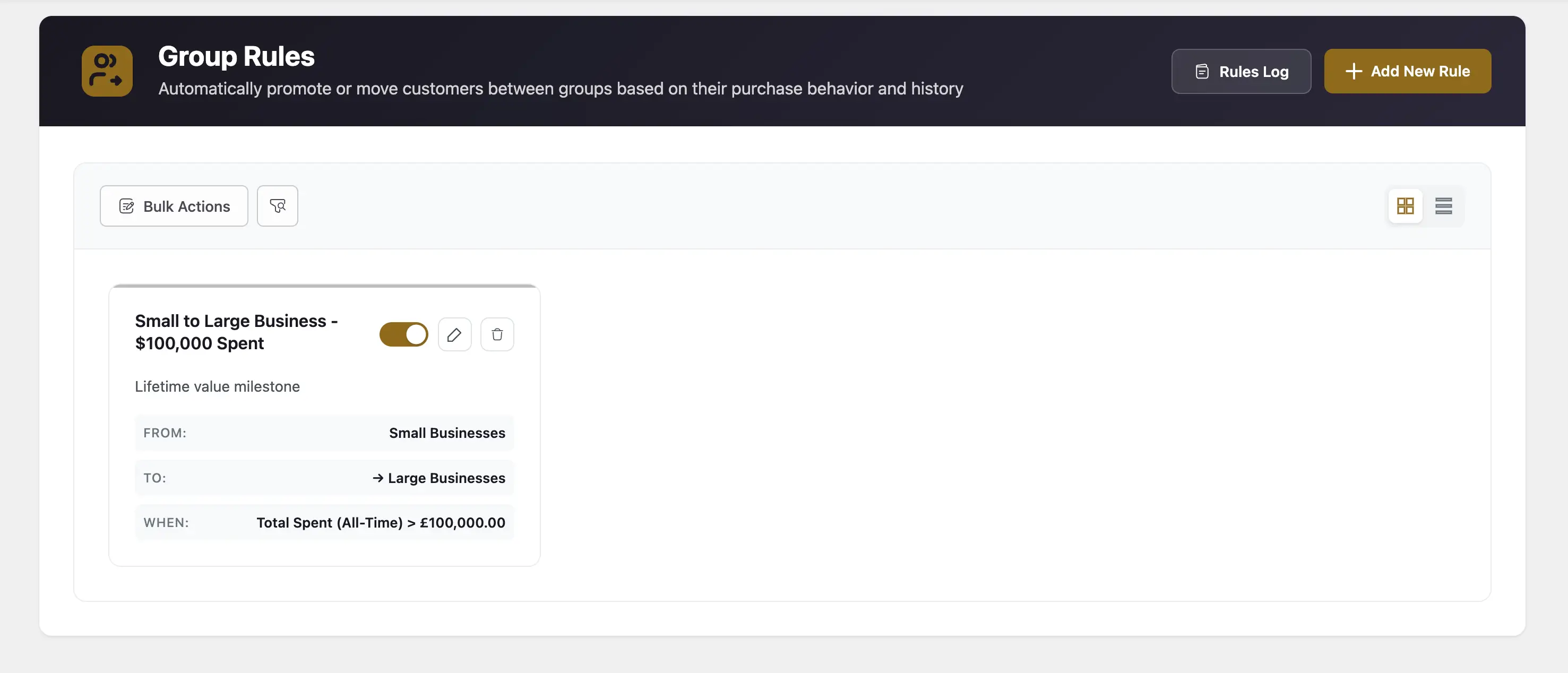
This approach transforms one-time transactions into ongoing relationships. Customers have an incentive to return to your store rather than shopping around, because their accumulated purchases contribute to better future pricing. The automation means you do not need to manually track and upgrade accounts, as the system handles it based on your defined rules.
Payment methods present another opportunity to optimize your B2B pricing strategy. Different payment methods have different costs to your business, and your pricing can reflect this reality.
Bank transfers typically carry lower fees than credit card payments. You might offer a 3% discount for customers who pay via bank transfer on orders above $2,000. Conversely, high-fee payment methods like PayPal might carry a small surcharge that offsets the transaction costs. This transparency helps customers understand the true cost of payment options while protecting your margins.
For very large orders, you might disable certain payment methods entirely. Credit card chargebacks on a $50,000 order represent significant risk. Many B2B stores disable card payments above certain thresholds, requiring bank transfers or other more secure payment methods for major transactions.
Pricing is only part of the equation. The purchasing experience itself needs to support bulk buying behavior. Customers who want to order 50 different products should not have to visit 50 product pages and click Add to Cart on each one.
B2BKing includes several features that streamline bulk purchasing. The Bulk Order Form presents your catalog in a simple list format where customers can quickly enter quantities for multiple products and add everything to their cart at once.
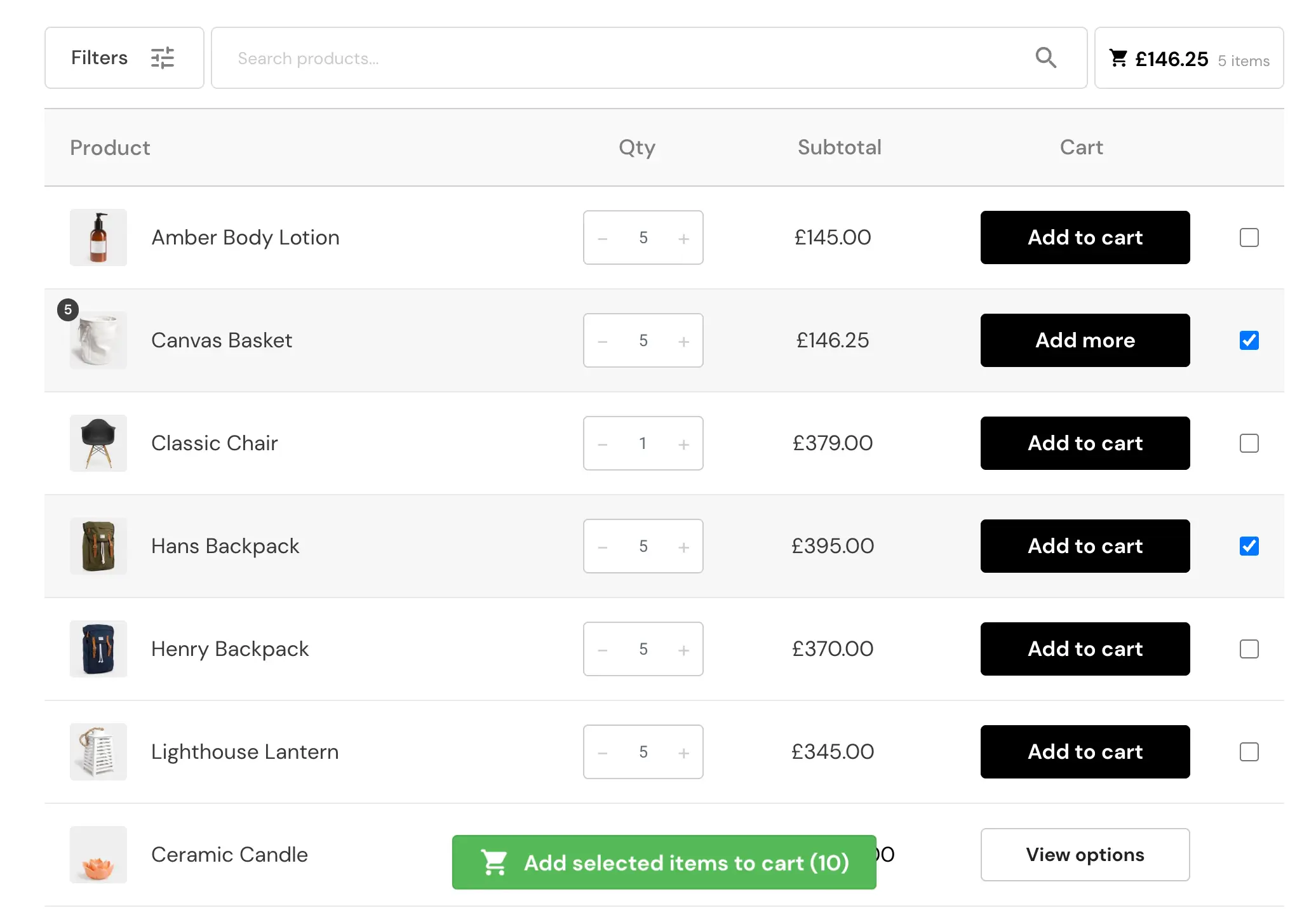
For customers who know exactly what they need, Quick Order CSV Import lets them upload a spreadsheet of SKUs and quantities to populate their cart instantly.
The Bulk Variations Table simplifies purchasing products with many variations. Rather than clicking through dropdown menus to select each size and color combination, customers see a table showing all variations at once. They can enter quantities across the entire table and add everything to the cart with a single click. For apparel, hardware, or any product with multiple variations, this dramatically speeds up the ordering process.
B2B and wholesale stores need tiered pricing that rewards volume, group-based pricing that reflects customer relationships, dynamic rules that provide flexibility, and tools that make bulk purchasing effortless.
The strategies outlined here work together to create a compelling value proposition for your business customers. Volume discounts encourage larger orders. Group pricing rewards loyalty. Conditional rules shape purchasing behavior. Loyalty progression keeps customers coming back. And streamlined ordering tools remove friction from the buying process.
With B2BKing, implementing these strategies does not require custom development or complex configurations. The plugin provides all these capabilities in a cohesive system designed specifically for B2B and wholesale operations.

